

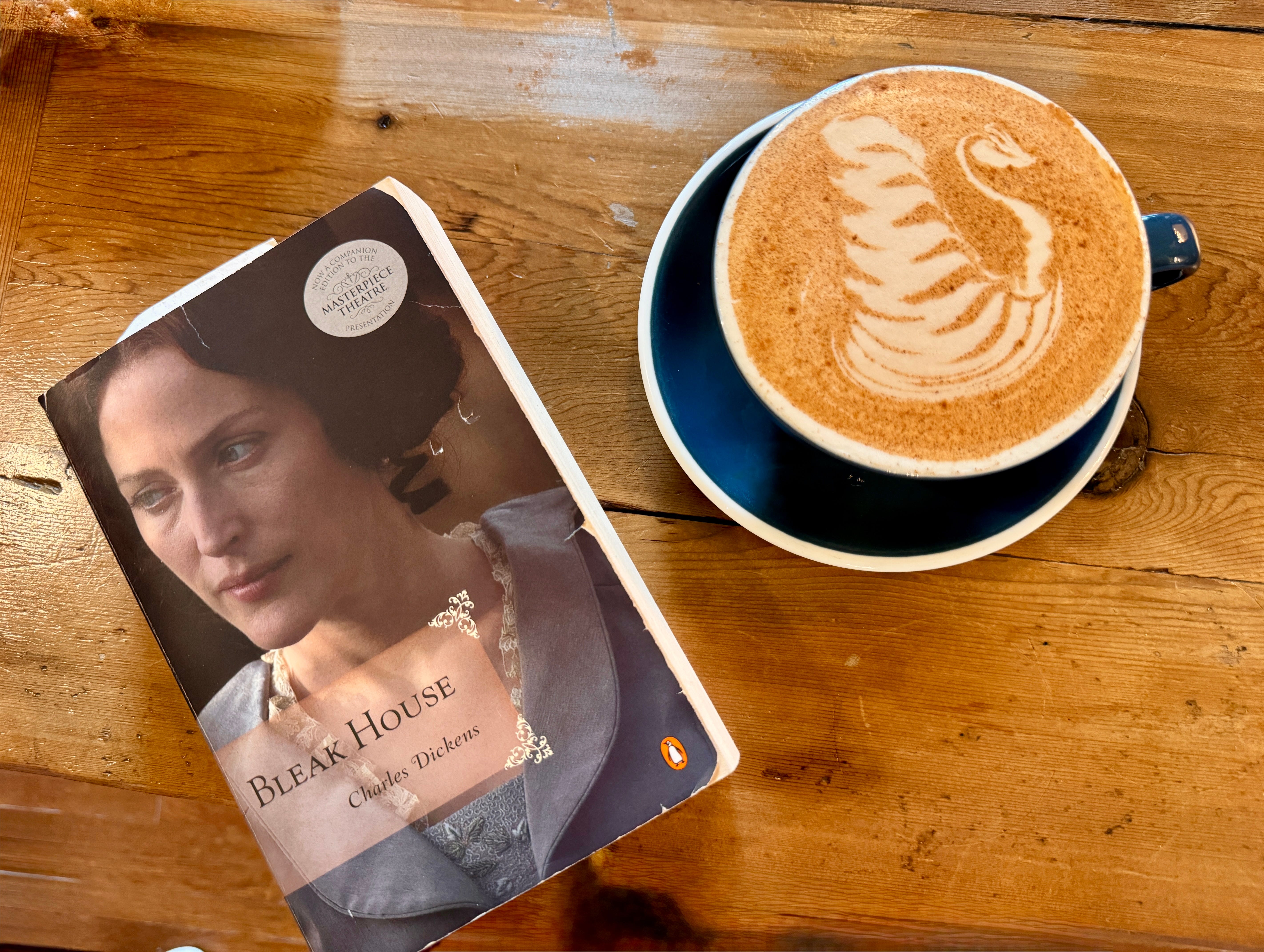
We can miss living in a book when it ends.
Right now, I miss living in the foggy, secretive, interconnected, overwhelming, funny, and ultimately beautiful world of Charles Dickens’ Bleak House.
Last winter, Marcus Luther and I identified this Charles Dickens doorstopper of a novel as one we had each wanted to read for a long time for different reasons, and we batted around how to tackle such a long read as busy English teachers.
We ended up planning backwards, as teachers are apt to do. Originally, the book was published in 19 serialized parts over 19 months, and we decided to read it in those original installments over the course of 19 weeks. The finish line for the book would be our last week of summer break.
We invited others to join us, and almost 40 teachers from across 5 continents did! Before long, we were logging weekly insights and literary banter in a multi-tabbed GoogleDoc that is long-winded and labyrinthine enough to make any Victorian novelist jealous.
But now that it’s over, I miss it.
Exactly what do I miss? Let me break it down. After that, I’ll reflect on what this teaches me about teaching literature and the helping students, I hope, discover the deep and abiding satisfaction of slow, intentional reading of challenging texts.
What I Miss
1. Characters who became friends and enemies
Dickens writes characters that can somehow be genuinely, deeply good or troublingly, connivingly evil without being caricatures, and so many of the characters felt like people I knew by the end of the novel.
I wanted Esther Summerson to muster confidence in herself. I wanted Miss Flite and her collection of caged birds to find freedom and hope. I grew to love the nobility of George, who seemed like a minor character at first and turned out to be an important moral linchpin later on. These were good, flawed, frustrated people, and I enjoyed keeping them as friends for a while.
2. Language that aspires to more than clarity
Dickens’ sentences are seldom unclear, but they are more verbose than sentences we — or even literary authors — craft today. And now we live in a world where AI affords us clarity in a keystroke but often saps voice and emotion from our ideas and our words. Victorian language was refreshing.
When describing the streets of London, Dickens writes about “smoke lowering down from chimney-pots, making a soft black drizzle, with flakes of soot in it as big as full-grown snow-flakes — gone into mourning, one might imagine, for the death of the sun” (Dickens 13).
When a character has simply had enough of another character’s tomfoolery, she writes, “I had nothing to offer in reply to this exposition, and therefore took my leave,” a line I may need to rewrite in present tense to deliver the next time a student bugs me (Dickens 935).
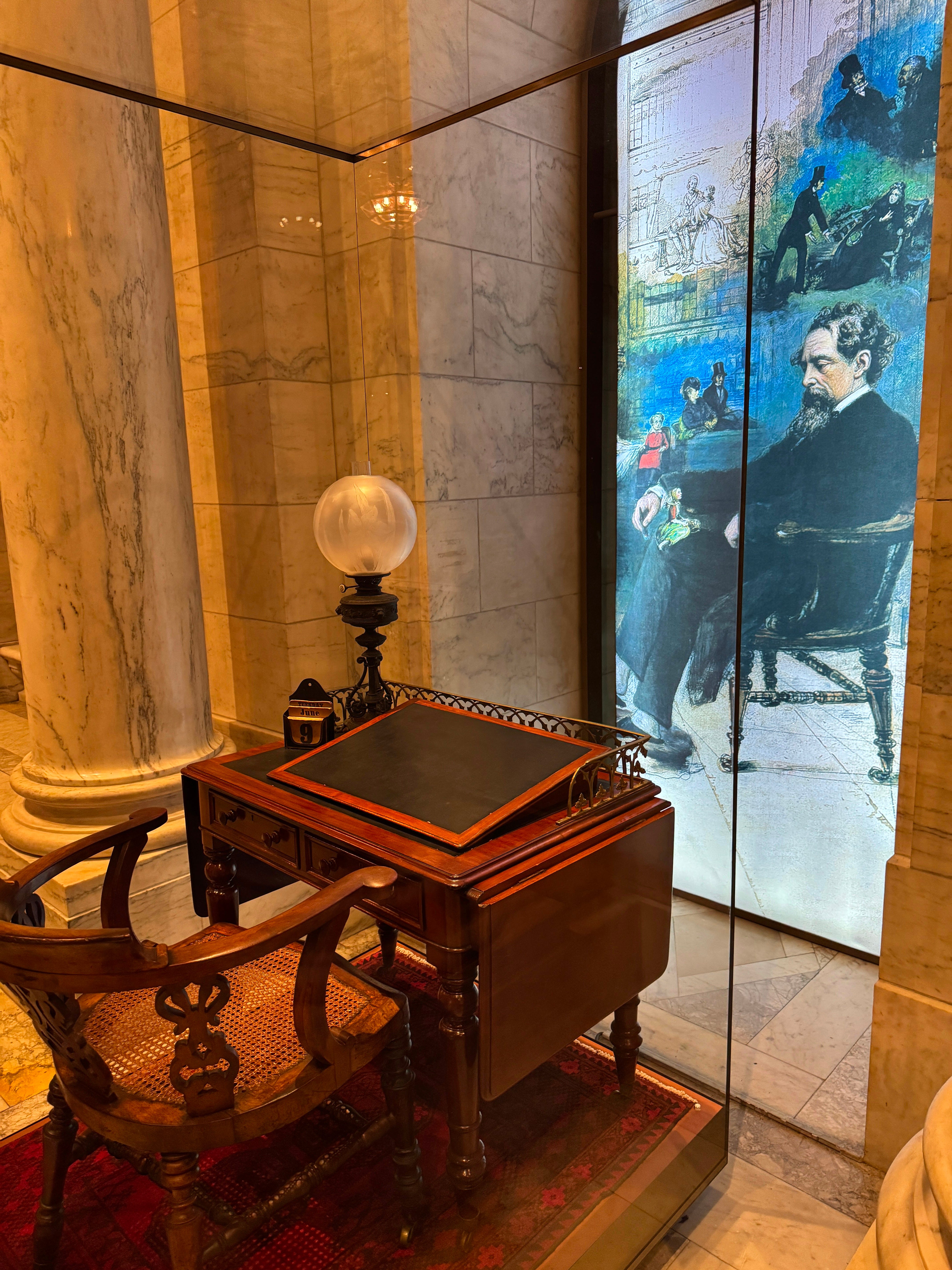
3. Plot elements that sizzle with relevance
A court case drags on forever, consuming resources of everyone involved. Secrets and past traumas haunt present relationships. Misunderstandings and ignorance descend into hilarity with a twist of despair. High and low classes live very different lives while inhabiting the same geographies.
I wrote in my online response one week that Bleak House is an ambitious “everything novel,” because it leaves no stone of the human experience unturned.
And as I read Dickens’ characters and social commentaries, I realized how every era faces the same conundrums, even if it’s all a bit foggier and windswept in nineteenth century England.
Bleak House, first published between March 1852 and September 1853, sizzles with relevance, and when Dickens burns the aristocracy or lawyers or dysfunctional parenting, often with sharp humor, it feels very much like he’s commenting on the world I inhabit in 2026.
4. Community that makes reading a prismatic experience
Without a group of readers checking in each week, co-creating a common record of our thinking, I might not have persevered in reading this book this long.
I enjoyed how often in our reading group’s commentary someone would highlight a sentence that I didn’t even remember reading and shine a light on double meaning, symbolic diction, or a revealing turn of phrase that opened up new interpretive possibilities.
I grew to look forward to each respondent’s voice: Some wrote with strokes of humor or sarcasm, others with wisdom gained from previous readings of this same text, others with historical insights from their background knowledge and travels.
This experience felt like reading through a prism in the best way. On my own, I could see the light in my reading, but my community of readers split that light and showed me all the colors inside of it.
What I Want to Remember
1. Talk and write about characters — a lot!
Our students need to invest in characters if they are going to love novels. (SIDE NOTE: they need to be reading entire novels in school, not just excerpts leveraged to build and test skills. Never thought I’d have to say that, but here we are.) They need to think through the reasons behind those characters’ decisions and empathize with character complexities and changes over the arc of a longer story.
Students must articulate what they love or hate about a character because those same attributes show up in real people in the world, people our students may have to deal with or can choose to avoid. Understanding characters is preparation for life.
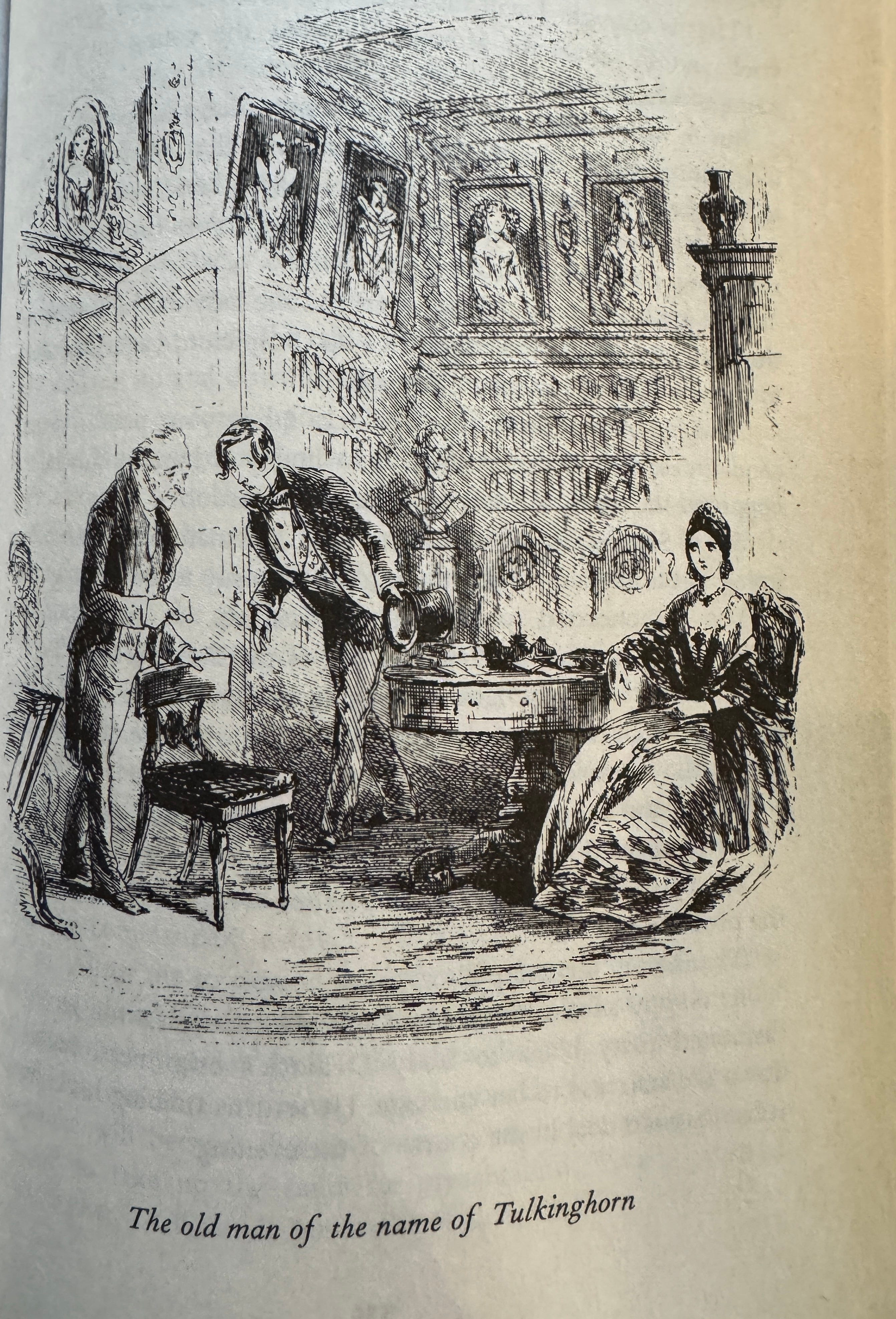
2. Zoom in on beautiful moments of language.
In a book as big and sometimes baggy as Bleak House, it was those lightning strike passages of language that kept me going. Being invited to read it slowly, as its original readers encountered it, gave me time to chew on any key line.
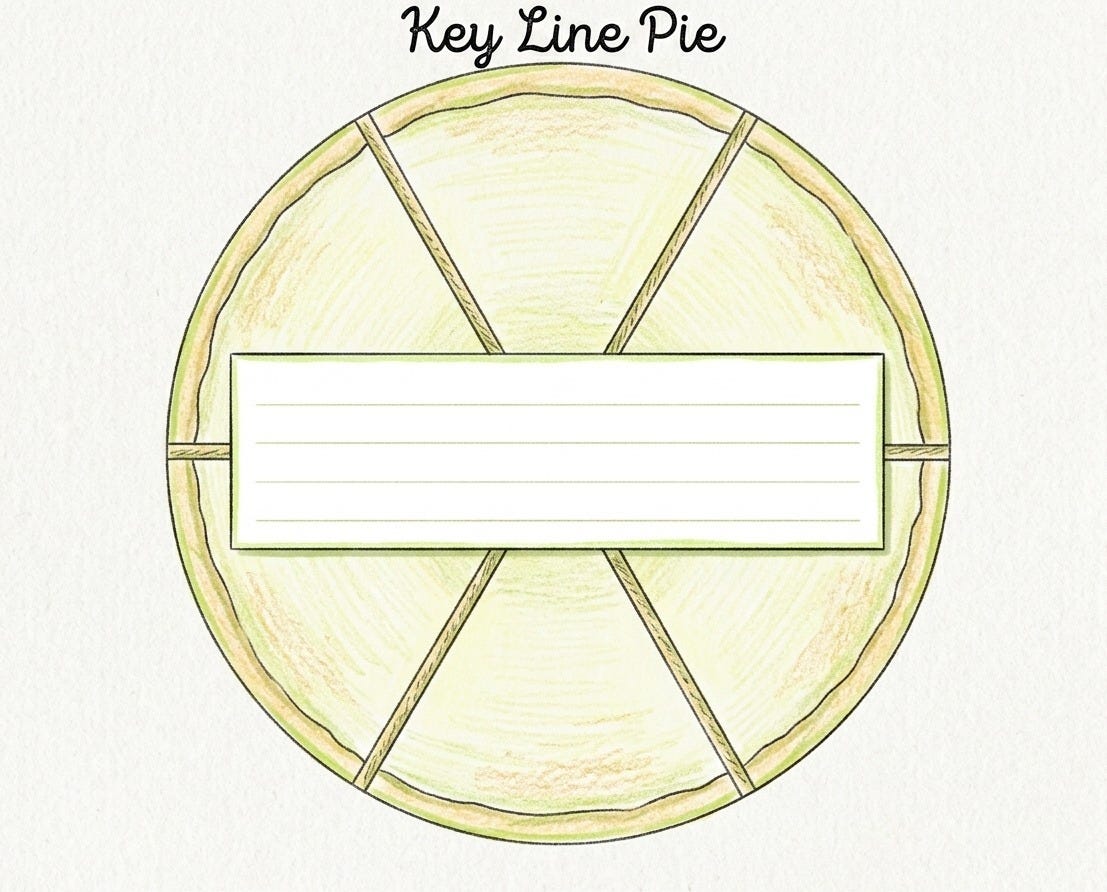
In the classroom, have used “key line pies” for years now. It’s a simple (and punny) graphic organizer with a six-slice pie chart and an empty rectangle in the middle. In the rectangle, students write a quote that made them stop and think. In each slice, they offer a different observation, interpretation, or question based on the quote. Slices five and six are tough, but the organizer pushes students to slow down and handwrite what they are thinking about and understand that great lines can evoke more than a narrow, straight-line thought.
We weren’t using graphic organizers, but this was exactly the kind of thinking our reading group was doing as we pulled out favorite lines.
Here’s just one I loved: “Impassive, as behooves its high breeding, the Dedlock town-house stares at the other houses in the street of dismal grandeur, and gives no outward sign of anything going wrong within” (Dickens 856).
They just don’t make sentences like that anymore. And as you can guess, something is wrong within the Dedlock house, but you’ll have to read the book if you want to know what it is. By this point in the novel, any reader could find six slices of meaning in this key line.
3. Ask students to draw lines between novels and the world.
It’s no news to teachers that relevance is essential to good teaching. Kids deserve to know why they should learn what we teach.
A few simple questions can help us draw out real-world relevance in class discussion of a book:
What aspects of this novel remind you of something in our world today?
What problems concern the author of this novel, and where are we at with those problems as a culture right now?
If character X lived today, how would he or she respond to Y? Prove it with a quote from the novel!
4. Build gratitude for a community of reading books.
Reading and reacting to a common text is a great way to know each other.
I never like to wait long in English class before starting a novel or novella because it builds a bond as we learn about each other’s tastes, values, and curiosities. Just as I was motivated to keep reading despite the challenge of this novel, students can be lifted into a text by engaged peers and thoughtful conversations in large and small groups.
Sometimes the social aspect of reading — students knowing they will get to share their ideas with people they care about — is what makes the work of reading a novel get done.
A New School Year Full of Books
The school year, full of books, awaits. I see my AP Literature students for the first time on Tuesday. And while I won’t be assigning Bleak House, just shy of 1000 pages, as a whole-class novel for the course, I want to remember what I learned from feeling humbled and enthralled and frustrated and intrigued and gobsmacked in a long, meticulous reading of a really good book.
I want my students to miss living in each book we read together when it ends.
Thanks for reading Declarative Imperative Interrogative Exclamatory! Subscribe for free to receive new posts and support my work.
Also, check out my books for teachers here.
I love that Key Line Pie organizer--such a catchy and fun idea for pushing thinking about a quote. I also love this process for reading a really long book. A few years ago, I did a year of Charles Dickens but I never got to Bleak House! The title doesn't really sell it as an uplifting reading experience! LOL I wonder: If you could give it a more alluring title, what would it be?
Well said Brett. For me, I didn’t care for the book, but I loved the experience. I probably wouldn’t picked up this book without the community aspect of the challenge. I felt out of my league when it came to the analysis. Even though I didn’t contribute much, I did take a lot from the words and thoughts of others. Thanks to you and Marcus for the experience.