
Teachers, keep reading.
An IMPERATIVE post about nourishing our own intellect and attention spans.

Telling teachers to keep reading can feel a little bit preachy, like the rather glib and annoying calls to “remember your why.”
But reading helps teachers for all the reasons it helps our students. It nourishes intellectual growth, provides escape into other worlds, explores topics at depths we’ve never considered, makes us ask questions we never knew we had. In work that demands incessant giving, reading books is a way of giving back to ourselves.
And yet . . . we’re tired. And it’s May. Much like our students, the lure of scrolling can be irresistible as our limited time with some peace and quiet slips over the dam in a noisy waterfall of images, clips, and sentence fragments.
When I recently cooked up the plan with fellow English teacher, Marcus Luther, to read Charles Dickens’ Victorian novel, Bleak House, it seemed intimidating. My Penguin edition, with a cover from the much-loved 2005 BBC miniseries based on the novel, is 989 pages long. This may be the longest book I’ve ever read.
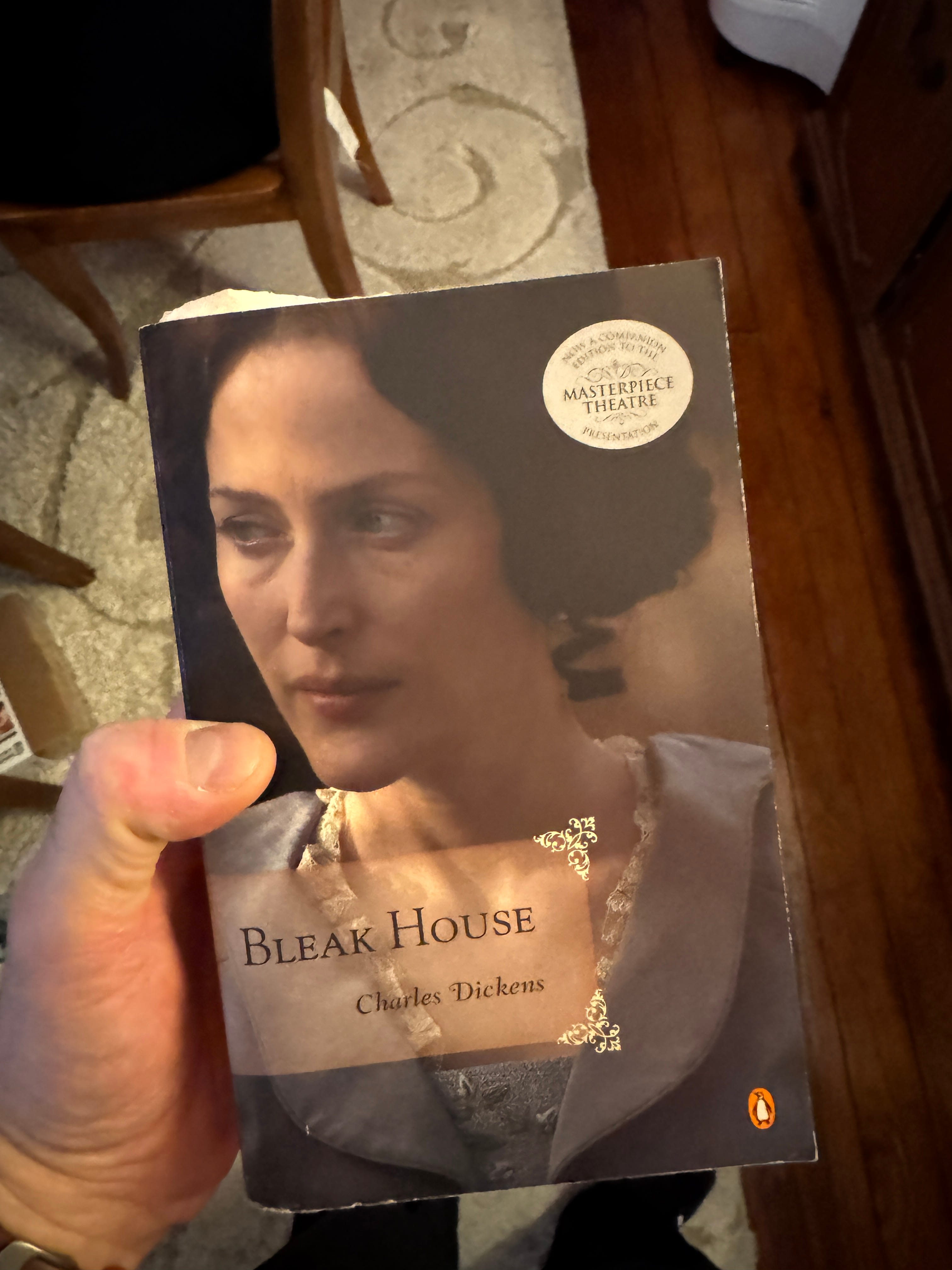
But Marcus reminded me: Dickens published his novels as serials, and this original came to readers in nineteen parts. He suggested a slow read from April to August, dividing the book into these original segments. Suddenly, this became like a season of a TV show to experience, one episode after another and just a bit of weekly discipline to make it happen.
Marcus and I knew we would both read this book, but we wanted to open the call to other teacher-readers, thinking that maybe a few would join us. Almost forty did, and among them, people from five continents, people who are on their third reading of this novel, and people who have never read any of Dickens’ work before.
Each week, we have a Google Doc where we share thoughts on a simple table, bulleting lists of responses to each other, and on average, we generate almost 10K words of response to our few chapters of reading each week. Not everyone jumps into the conversation each week. That’s life, and that’s OK. We are busy teachers, and we are reading something big and challenging together.
I find my own reading life moves in seasons. Sometimes I’m voracious, other times less engaged, and that’s OK too. I’ve come to appreciate that is part of being a real-life reader. But if you are in a season where book reading is not part of your routine right now, here are two top-of-mind lists:
Why Teachers Should Read:
1. We deserve an escape from reality.
2. Our brains need some reading that is not crafted by our students.
3. Challenging books make students of us again. We can identify the strategies that help us latch on to tough text and credibly talk about our experience in the classroom.
4. Unchallenging books can help us experience a sort of “reader’s runner’s high” as we keep those pages turning. Bring on the genres!
5. Professional books help us feel empowered and less alone in our work, inspired by other skilled and compassionate teachers.
6. We all need help training our own twenty-first-century attention spans.
7. Connecting with other readers, live or virtually, expands the way we think about any book.
8. Books call us to remember what’s at the heart of our teaching, why we do what we do in the classroom each day.
How Teachers Can Keep Reading
1. Take a big book in tiny chunks. There are some great long books with short chapters out there – I’m looking at you Anthony Doerr!
2. Find someone to read a book at the same time as you are and chat or text about it.
3. Use your local library or libro.fm (which supports your local bookstore and always has a good sale selection) to listen to audiobooks. It’s not cheating!
4. Find a novel-in-verse written for teens or a graphic novel or memoir that gets you moving cover-to-cover quickly. I’ve blasted away the cobwebs of a reading lull many times this way.
5. Read aloud to your own children. It’s OK to choose a novel they couldn’t read themselves. My mom read us Great Expectations as we fell asleep as late-elementary-aged kids . . . maybe that’s why I’m drawn to Bleak House today!
6. Add a line about what book you are currently reading to the signature line of your email. You’ll be amazed at the conversation it sparks!
7. Think of an author you loved years ago but haven’t had time for lately. Pick up something you haven’t read yet by that author.
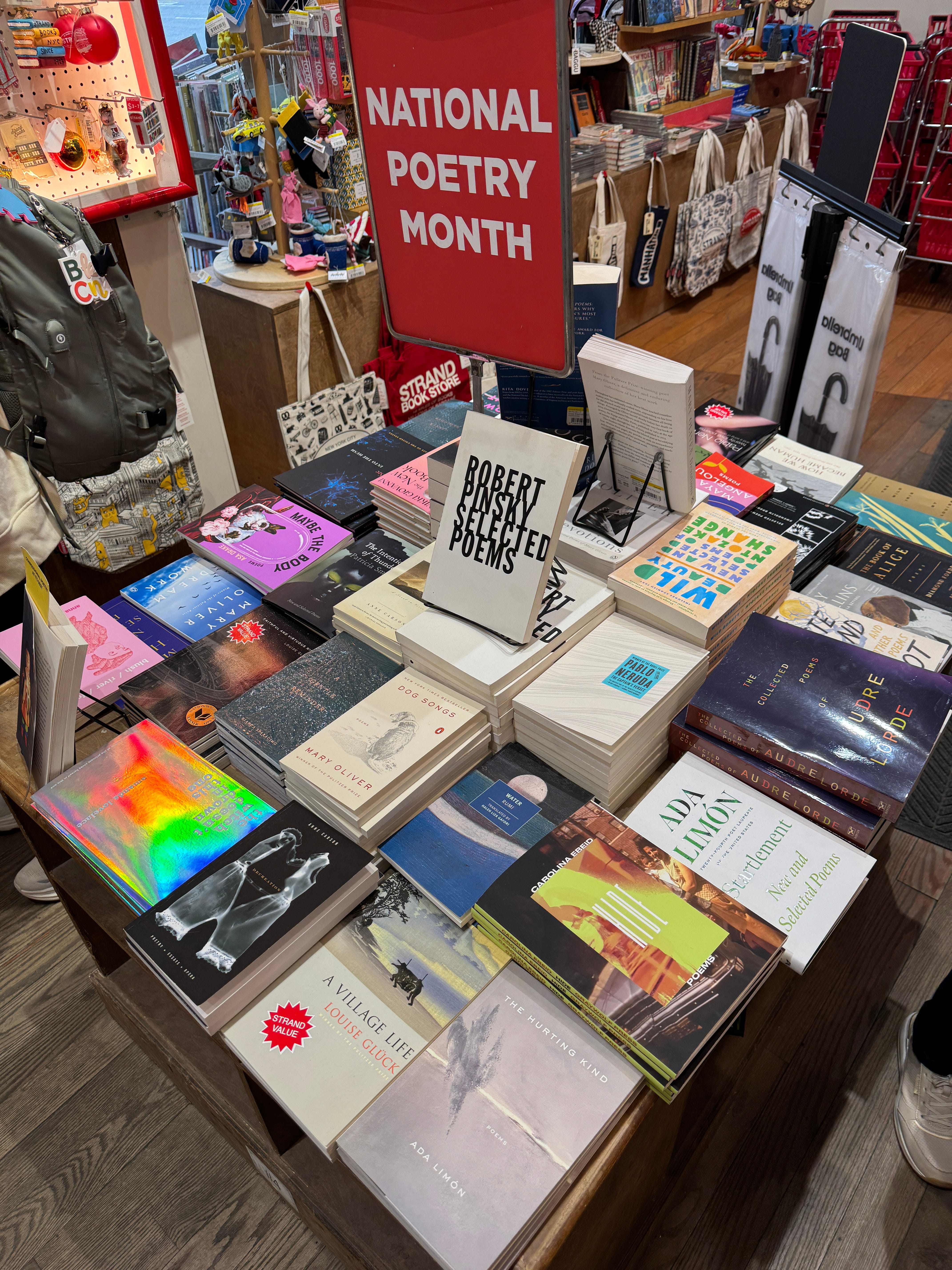
8. Pop by a bookstore and let the stacks guide you to your next read. The poetry displays at The Strand in New York City (see below) and at Book Moon in Easthampton, Massachusetts both provoked impulse buys on my travels last month.
9. Plan with a few colleagues to read a professional book together, one chapter at a time, and informally chat through what strategies seem like they would work in your school.
Our work is exhausting and fruitful and frustrating and wild.
On stormy seas, books provide ballast.
If you’re in a reading slump right now, try to find something that re-ignites your own love of books. And if you’re reading something great right now, drop it in the comments and tell others about it – we’d love to join you!
All the teachers at my school have a sign outside their door where we post our current reads. Love it!
As one of the 'Bleak House' crew (thank you), I endorse all these comments.
At this time of the year particularly relish the reading ahead, and wrote about that:
https://www.juliangirdham.com/blog/on-reading-more